


the fungus will disappear in 1 day! write down an expert's recipe...
March 17, 2026
4:04 am

after reading this, you will be rich in 7 days. simple trick...
March 17, 2026
4:11 am
A Failed Experiment Just Accidentally Revolutionized How We Make Medicine
March 17, 2026
04:15
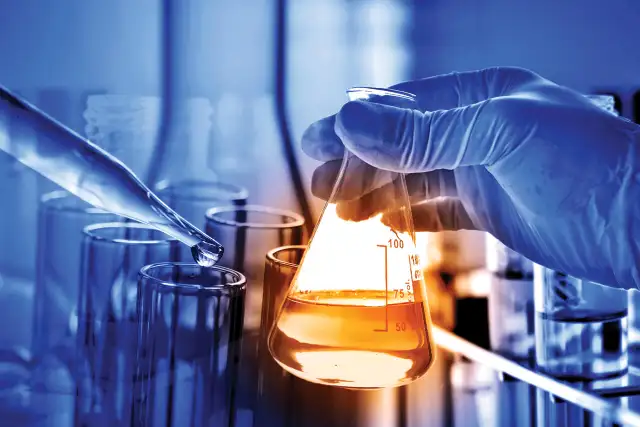
Some of science’s greatest breakthroughs, penicillin, X-rays, and Viagra, were born from mistakes. Now, a team at the University of Cambridge has added another entry to that list: a light-powered chemical reaction that could fundamentally change how pharmaceutical companies design and manufacture drugs. And it happened because an experiment went wrong.
Researchers at the University of Cambridge, publishing their findings in March 2026, have developed a new method to modify complex drug molecules using nothing more than an LED lamp, as reported by Phys.org. The technique triggers a self-sustaining chain reaction that forges new carbon-carbon bonds, one of the most fundamental building blocks of organic chemistry, under mild laboratory conditions, without the toxic or expensive metal catalysts that current methods require.
The discovery emerged from what the team initially considered a failed experiment. When a planned reaction did not produce the expected result, the researchers noticed an unexpected molecular transformation had occurred instead. Rather than discarding the anomaly, they investigated and found a reaction pathway that no one had deliberately designed or predicted.
Recent Posts
stars are now ditching botox thanks to this new product......
March 17, 2026
4:14 am
salvation from baldness has been found! (do this before bed)...
March 17, 2026
3:51 am
a spoon on an empty stomach burns 26 lbs in a week...
March 17, 2026
3:45 am

this simple trick removes all parasites from your body!...
March 17, 2026
3:50 am
The implications are significant. Carbon-carbon bond formation is the cornerstone of drug synthesis. Nearly every pharmaceutical compound relies on these bonds, and the conventional methods to create them often involve palladium, platinum, or other rare and toxic metals that generate hazardous waste and drive up manufacturing costs.
This discovery arrives at a moment when the pharmaceutical industry is under intense pressure to reduce both costs and environmental impact.
The Cambridge discovery is a case study in what researchers call “serendipity bias,” the tendency for funding bodies and corporate R&D departments to undervalue unexpected findings. In a system optimized for predictable milestones and quarterly deliverables, the kind of open-ended experimentation that produced this breakthrough is increasingly rare and underfunded.
Recent Posts

read this immediately if you have moles or skin tags, it's genius...
March 17, 2026
3:47 am

varicose veins disappear as if they never happened! use it before bed...
March 17, 2026
4:02 am
people from america those with knee and hip pain should read this!...
March 17, 2026
3:59 am

the fungus will disappear in 1 day! write down an expert's recipe...
March 17, 2026
4:09 am
As the Cambridge team noted, the reaction pathway they discovered was not in any textbook and would not have been predicted by computational chemistry models. It required human observation of an anomaly and the scientific curiosity to pursue it, qualities that algorithms, for all their power, cannot yet replicate.
If the technique scales successfully, it could lower the manufacturing cost of existing drugs and enable the synthesis of entirely new molecular structures that were previously too expensive or technically difficult to produce. For patients, that translates to potentially cheaper medications and access to novel therapies that current chemistry cannot efficiently deliver.
The Cambridge team is now working with pharmaceutical partners to test the method’s scalability on industrial equipment. The key question is whether the light-driven chain reaction can maintain its efficiency at volumes thousands of times larger than a laboratory flask. Early indications are promising; the reaction’s self-sustaining nature means it does not require continuous energy input, which is unusual for photochemical processes.
Recent Posts

say goodbye to debt and become rich, just carry them in your wallet...
March 17, 2026
3:50 am
a young face overnight. you have to try this!...
March 17, 2026
4:12 am
hair grows back in 2 weeks! at any stage of baldness...
March 17, 2026
3:45 am

my weight was 198 lbs, and now it’s 128 lbs! my diet is simple. 1/2 cup of this (before bed)...
March 17, 2026
4:08 am
If successful, the method could be integrated into existing pharmaceutical manufacturing pipelines within three to five years, according to the researchers. In an industry that rarely moves quickly, that timeline would be remarkably fast, fitting, perhaps, for a discovery that was never supposed to happen in the first place.
What did Cambridge scientists discover? A way to modify drug molecules using light from an LED lamp instead of toxic metal catalysts, creating carbon-carbon bonds through a self-sustaining chain reaction under mild conditions.
Why is this important for medicine? It could reduce the cost and environmental impact of drug manufacturing while potentially enabling the creation of new drugs that current methods cannot efficiently produce.
Was this discovery intentional? No. It emerged from a failed experiment. The researchers noticed an unexpected molecular transformation and investigated it, discovering a reaction pathway not predicted by existing chemistry models.
Recent Posts

Batelco’s network operations centre in Bahrain, 2009. Photo: Masdestructive via Wikimedia Commons, CC BY-SA 3.0 (cropped) “Black October” is a nickname, not an attack. It’s the label social media gave to a pile-up of seven...
October 24, 2026
6:03 am
doctor: a teaspoon kills all parasites in your body!...
October 24, 2026
5:51 am

An iPhone Duo on launch day, October 23, 2026. Photo: SimonWaldherr via Wikimedia Commons, CC BY 4.0 (cropped) A handful of iPhone Duo owners say their inner screens cracked along the hinge within hours of...
October 24, 2026
6:02 am
if you find moles or skin tags on your body, read about this remedy. genius!...
October 24, 2026
5:50 am

The Artemis III SLS core stage is lifted inside the Vehicle Assembly Building at NASA’s Kennedy Space Center in Florida. Photo: NASA via NASA Image and Video Library, public domain (cropped) Artemis III will not...
October 24, 2026
6:02 am
america is in shock! it helps to get rid of varicose veins. do it at night...
October 24, 2026
5:57 am

A CBP officer interviews an arriving passenger during enhanced Ebola screening at Washington Dulles International Airport in October 2014. Photo: Josh Denmark/U.S. Customs and Border Protection via Wikimedia Commons, public domain (cropped) Starting the night...
October 24, 2026
6:02 am

i did this and my knees and joints haven’t hurt for 10 years now....
October 24, 2026
5:54 am

Jacob Misiorowski pitching for the Milwaukee Brewers at American Family Field in June 2025. Photo: Drovetochicago via Wikimedia Commons, CC BY-SA 4.0 (cropped) Jacob Misiorowski’s first pitch of the World Series was a 103.5 mph...
October 24, 2026
6:01 am
do this every night and the fungus will disappear in 5 days...
October 24, 2026
5:51 am

The US Capitol, where the Senate and House meet, in September 2013. Photo: Martin Falbisoner via Wikimedia Commons, CC BY-SA 3.0 (cropped) Control of the Senate in the 2026 midterms comes down to about seven...
October 24, 2026
1:52 am

after reading this, you will be rich in 7 days...
October 24, 2026
1:24 am