Audrey Crews: How Neuralink Enabled a Paralyzed Woman to Write and Draw With Her Mind
Quick Summary
After 20 years of paralysis, Audrey Crews made history in July 2025 as the first woman to receive Elon Musk’s Neuralink brain chip implant. By harnessing her thoughts, she’s now able to write her name and draw on a computer, offering a remarkable demonstration of brain–computer interface (BCI) technology. Neuralink’s breakthrough is sparking discussion across medicine, tech, and disability advocacy.
Who Is Audrey Crews, and What Is Neuralink?
Audrey Crews is a quadriplegic woman paralyzed since age 16 due to an accident. In July 2025, Crews became the first woman to receive Neuralink’s “N1” implant as part of ongoing human trials. Neuralink, founded by Elon Musk in 2016, develops brain–computer interfaces to help people with neurological challenges directly control digital devices using only the power of thought.
What Did Audrey Crews Achieve With the Neuralink Implant?
- Writing Her Name by Thought Alone: Crews posted a digital image of her name, “Audrey,” written for the first time in 20 years—no keyboard, pen, or mouse required, just her mind and the Neuralink system.
- Digital Independence: Beyond writing, she can now draw and play games on a computer, all by thinking the movements she wants to make.
- Viral Milestone: Crews’ story, shared on X (formerly Twitter), quickly drew millions of views and a direct response from Elon Musk, who remarked: “She is controlling her computer just by thinking. Most people don’t realize this is possible.”
How Does the Neuralink Brain Chip Work?
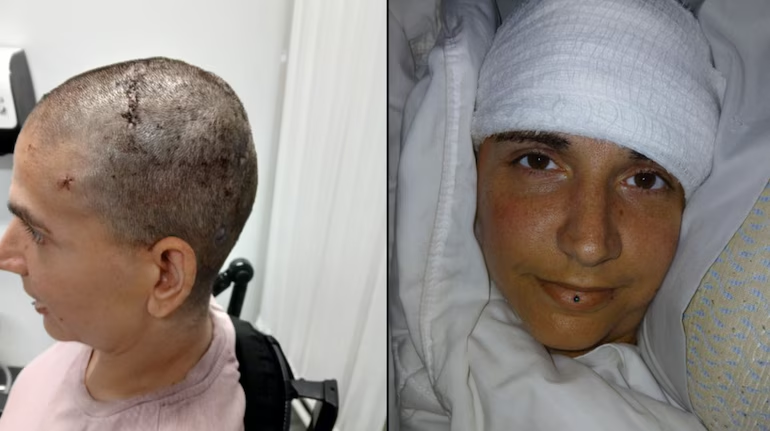
- Surgical Implant: Doctors at the University of Miami Health Center drilled a small hole in Crews’ skull and inserted 128 ultra-thin threads into a part of her motor cortex—the brain region involved in movement.
- Device Specs: The “N1 Implant” (also known as “The Link”) is roughly the size of a quarter (or a 10p coin).
- Neural Signals: When Crews thinks about moving her hand or writing, specific neurons fire. The implant’s electrodes record these electrical signals.
- Telepathic Control: Neuralink transmits the neural data wirelessly to external computers, where AI algorithms decode her intentions and translate them into actions like moving a cursor, typing, or drawing—all without physical movement.
- Key Limitation: The chip does not restore her ability to walk or move physically; its power is currently limited to “telepathic” digital commands.
Why Is This Such a Big Deal?
- Medical Impact: Neuralink’s progress gives hope to millions facing paralysis or neurodegenerative disorders, offering a new path to digital independence.
- Tech Leap: Crews’ achievement demonstrates that thought-to-digital communication via BCIs is feasible in everyday settings, not just labs.
- Inspiration: Her openness—posting videos, updates, and inviting followers “to meet me and follow my journey”—makes her a powerful advocate for emerging assistive technology.
- Next Steps: Neuralink eventually aims for broader applications, potentially allowing expanded digital control, restoring more functions, or even enabling “human-to-human telepathic communication” as hinted in company trademarks and Musk’s previous statements.
What Makes Audrey’s Story Stand Out From Past Brain-Computer Breakthroughs?
- First Woman in Clinical Trials: Until now, most BCI trial participants have been men. Audrey’s participation not only breaks a gender barrier but also helps expand the data for how these devices work in different individuals.
- Rapid Recovery: Crews underwent surgery just weeks before publicly showcasing her digital handwriting, signaling advances in surgical precision and device safety.
- Public Documentation: By sharing both tech details (like, “128 threads… drilled into my motor cortex”) and her personal milestones, she’s helping make mind-controlled tech more accessible and understandable for the public.
What Are the Challenges and What’s Next?
- BCI Limitation: At its current stage, the Neuralink BCI is for digital “telepathy” only—allowing users to control computers, but not restoring muscle movement or walking.
- Long-Term Questions: The technology’s durability, long-term safety, and broader applicability are still being studied.
- Regulatory Oversight: Like all medical innovations, future widespread use will require careful review by food and drug authorities and continual monitoring for safety and ethical concerns.
This article Audrey Crews: How Neuralink Enabled a Paralyzed Woman to Write and Draw With Her Mind appeared first on BreezyScroll.
Read more on BreezyScroll.

Dallas Cowboys Cheerleaders Form a Union. What They Can Bargain For
The Dallas Cowboys Cheerleaders perform at AT&T Stadium in Arlington, Texas, during a 2019 preseason game. Photo: Michael Barera via Wikimedia Commons, CC BY-SA 4.0 (cropped) The Dallas Cowboys have agreed to bargain with a...
Hair Will Grow Back! No Matter How Severe the Baldness
hair will grow back! no matter how severe the baldness...
Six Flags Is Adding Seat Belts to Goliath. Which Coasters Are Affected
Goliath at Six Flags Over Georgia, photographed in 2007. Photo: Coasterman1234 via Wikimedia Commons, CC BY-SA 3.0 (cropped) Six Flags will add seat belts to Goliath at Six Flags Over Georgia and to “other coasters...
If You Find Moles or Skin Tags on Your Body, Read About This Remedy
if you find moles or skin tags on your body, read about this remedy...
Screwworm Found in a Wild Elk and a New Mexico Cow: What It Means
Dyed sterile New World screwworm flies under examination at the USDA APHIS sterile fly dispersal facility at Moore Air Base in Edinburg, Texas, on February 10, 2026. Photo: USDA via Wikimedia Commons, public domain (cropped)...
Doctor: Іf You Have Nail Fungus, Do This Immediately
doctor: Іf you have nail fungus, do this immediately...
4 Philippine Air Force Pilots Killed as 2 SF-260 Trainers Crash
A Philippine Air Force SF-260 trainer on display at the PAF Aerospace Museum in Pasay City. Photo: RoyKabanlit via Wikimedia Commons, CC BY-SA 4.0, cropped Four Philippine Air Force pilots died on Friday, October 23,...
This product is putting plastic surgeons out of work
this product is putting plastic surgeons out of work...
UK Asks Homes to Keep 3 Days of Emergency Supplies. Is That Enough?
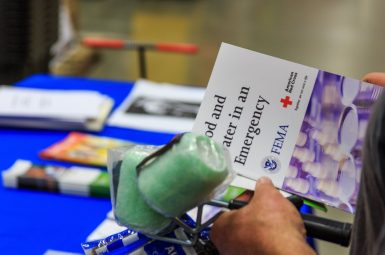
A shopper reads a FEMA and Red Cross guide to storing food and water in Kansas City, Missouri, in 2014. Photo: Steve Zumwalt/FEMA via Wikimedia Commons, public domain (US government work), cropped Britain is asking...
Say Goodbye to Debt and Become Rich, Just Carry Them in Your Wallet
say goodbye to debt and become rich, just carry them in your wallet...
Black Triangle UFO Files: Where the 1,800 mph Figure Comes From
The Pentagon in Arlington, Virginia, whose UFO office, AARO, wrote one of the two reports on the triangle. Photo: US Geological Survey via Wikimedia Commons, public domain, cropped Federal agents reported the black triangle UFO...
Lose 40 lbs by Consuming Before Bed for a Week
lose 40 lbs by consuming before bed for a week...