
hair grows 2 cm per day! just do this...
July 21, 2025
7:21 am

the secret of buddhist monks: how to overcome joint pain....
July 21, 2025
7:14 am
Watch: Donald Trump Posts AI Video of Barack Obama’s Arrest: “No One Is Above the Law”
July 21, 2025
07:30
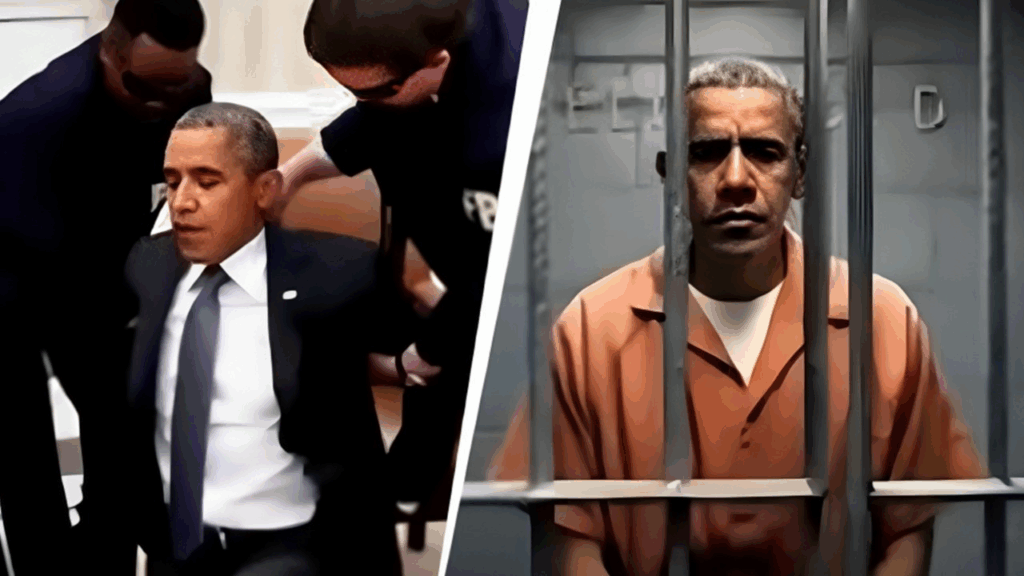
On Monday, former President Donald Trump shared an AI-generated video on his platform, Truth Social, that appeared to show the Federal Bureau of Investigation arresting Barack Obama in the White House. The video, digitally crafted to look convincing, quickly spread across social media and news outlets.
The clip begins with Obama stating, “especially the president is above the law.” Then, it cuts to Joe Biden, also an AI-generated likeness, asserting, “no one is above the law.” The scene shifts to agents handcuffing Obama in the Oval Office, the same room he once occupied as president. Meanwhile, Trump is depicted sitting nearby, smiling. The video concludes with Obama wearing an orange jumpsuit in a prison cell – a visual cue closely associated with American criminal mugshots.
Donald J. Trump Truth Social 07.20.25 06:47 PM EST pic.twitter.com/Xf5LYzkZiI
Recent Posts
— Fan Donald J. Trump Posts From Truth Social (@TrumpDailyPosts) July 20, 2025 This Simple Trick Removes All Parasites From Your Body!
this simple trick removes all parasites from your body!...
July 21, 2025
7:05 am
If You Find Moles or Skin Tags on Your Body, Read About This Remedy. Genius!if you find moles or skin tags on your body, read about this remedy. genius!...
July 21, 2025
7:19 am
After Reading This, You Will Be Rich in 7 Days. Simple trickafter reading this, you will be rich in 7 days. simple trick...
July 21, 2025
7:21 am
Do this twice a day, and everyone will think you have Botox!do this twice a day, and everyone will think you have botox!...
July 21, 2025
7:03 am
The biggest concern, according to critics, isn’t just the video’s existence but Trump’s decision to post it without any label or disclaimer clarifying that it is artificial and not real footage. This omission led to accusations that Trump was deliberately spreading misinformation.
The timing is noteworthy. Trump posted the video just days after Tulsi Gabbard, the former U.S. Representative from Hawaii and Democrat-turned-independent, accused the Obama administration of orchestrating a “treasonous conspiracy” to undermine Trump’s 2016 election victory. Gabbard claimed that national security officials under Obama “manufactured” intelligence assessments about Russian interference for political purposes.
AI-generated deepfakes are videos or images created using artificial intelligence to make it appear that someone said or did something they never actually did. The technology has advanced rapidly, making it increasingly difficult to distinguish real from fake content.
Recent Posts

the fungus will disappear in 1 day! write a specialist's prescription...
July 21, 2025
7:14 am
lose 40 lbs by consuming before bed for a week...
July 21, 2025
7:24 am
varicose veins will go away ! the easiest way!...
July 21, 2025
7:01 am

hair grows 2 cm per day! just do this...
July 21, 2025
7:25 am
Satire and parody have long been part of political discourse in the U.S., protected under free speech laws. However, the key difference is intent and labeling:
The spread of unlabeled AI videos in politics poses several dangers:
Combating the harmful effects of AI-generated misinformation requires a multi-layered approach:
Donald Trump’s decision to share an unlabeled AI-generated video depicting Barack Obama’s arrest is more than a political stunt—it’s a case study in the growing risks of deepfake technology. As tools to create realistic fake videos become more accessible, the potential for misinformation in politics rises sharply. The incident underscores the urgent need for public awareness, platform accountability, and thoughtful regulation to protect the integrity of public discourse. For now, the best defense is a skeptical, well-informed public—and a commitment to calling out fiction dressed as fact.
This article Watch: Donald Trump Posts AI Video of Barack Obama’s Arrest: “No One Is Above the Law” appeared first on BreezyScroll.
Read more on BreezyScroll.
Recent Posts

A US Navy destroyer in the Strait of Hormuz on April 11, 2026, as US forces began mine-clearance operations (file photo). Photo: NAVCENT Public Affairs, U.S. Central Command, via Wikimedia Commons, public domain The US...
October 26, 2026
7:57 pm
i did this on my grandmother’s advice and my knees haven’t hurt for 5 years now!...
October 26, 2026
7:38 pm

A United Airlines Boeing 737-800 at the Las Vegas airport, then called McCarran, in June 2016. It is not the aircraft involved in the October 24 incident. Photo: Sunnya343 via Wikimedia Commons, CC BY-SA 4.0,...
October 26, 2026
7:56 pm
this simple trick removes all parasites from your body!...
October 26, 2026
7:55 pm

IDF Chief of Staff Lt. Gen. Eyal Zamir, left, at a meeting with Southern Command division commanders in August 2025. Photo: IDF Spokesperson’s Unit via Wikimedia Commons, CC BY-SA 3.0 (cropped) Israel’s Channel 12 reported...
October 26, 2026
7:53 pm

if you find moles or skin tags on your body, read about this remedy...
October 26, 2026
7:47 pm

Barclays Center in Brooklyn, home of the NBA’s Brooklyn Nets. Photo: CityLimitsJunction via Wikimedia Commons, CC0 (public domain dedication, cropped) The NBA on Monday named Kalshi and Polymarket its “Preferred Prediction Market Exchanges.” It also...
October 26, 2026
7:33 pm

tired of debt? become a money magnet and leave poverty behind!...
October 26, 2026
7:27 pm

Building 92 at Microsoft’s headquarters in Redmond, Washington, in May 2016 (file photo). Photo: Coolcaesar via Wikimedia Commons, CC BY-SA 4.0 (cropped) Microsoft offered voluntary buyouts to about 60,000 employees on Monday, October 26, roughly...
October 26, 2026
7:30 pm
stars are now ditching botox thanks to this new product....
October 26, 2026
7:28 pm

Anthropic CEO Dario Amodei at TechCrunch Disrupt in 2023 (file photo). Photo: TechCrunch, via Wikimedia Commons, CC BY 2.0 (cropped) Disclosure: BreezyScroll uses Anthropic’s Claude to help draft articles. Anthropic, the company behind the Claude...
October 26, 2026
7:26 pm

doctor: if you have nail fungus, do this immediately...
October 26, 2026
7:12 pm